

Best Digital PR Experts to Follow in 2027

A note on this list: This list is Marketing Signals' own view, and it includes members of the Marketing Signals team. Use it as one view alongside independent sources and your own research.
Digital PR earns the coverage that both search engines and AI assistants rely on. A story placed in a national, regional or trade publication brings a link that supports Google rankings, and it adds a trusted mention that ChatGPT, Gemini, Perplexity, Claude and Google AI Overviews can draw on when they describe or recommend a brand. That has pushed digital PR closer to brand building and communications strategy, and the practitioners who explain those changes clearly are worth following in 2027.
This list picks people rather than agencies. Each expert was chosen for four things: current, hands-on work in digital PR or the wider PR craft, a public record of sharing what they learn through talks, articles, events or podcasts, practical advice a reader can use on a real campaign, and a clear view of how coverage now feeds AI visibility as well as links. Every expert outside Marketing Signals was checked against their own company website, LinkedIn or a conference speaker page.
Best Digital PR Experts to Follow in 2027: At a Glance
| Expert | Known For | Based | Where To Follow |
|---|---|---|---|
| Gareth Hoyle | Agentic AI and AI visibility across search and PR | UK (Marketing Signals, Halifax) | |
| Sarah Jackson | PR for technology and creator economy brands | London and New York (Sundaze PR) | Sundaze PR blog |
| Jade Denby | Leading a digital PR team at the centre of an integrated search agency | UK (Marketing Signals, fully remote) | Marketing Signals author page |
| Carrie Rose | Creative, search-first campaigns at Rise at Seven | UK (Rise at Seven: Manchester, London, New York) | LinkedIn, X |
| James Brockbank | Content-led SEO, digital PR and the Digital PR Summit | UK (Digitaloft: Kendal and Manchester) | LinkedIn, X |
| Beth Nunnington | Brand-led digital PR across the UK and US | Journey Further (UK and US team) | LinkedIn, X, Bluesky |
| Shai Aharony | Published search experiments and a large digital PR team | London, UK (Reboot Online) | |
| Lisa Paasche | Building and leading creative search and PR teams | UK | Being EKTE podcast |
1. Gareth Hoyle, Marketing Signals
Based: UK (Marketing Signals, registered office in Halifax) | Profile
Gareth Hoyle is Managing Director and founder of Marketing Signals, which he has run since 2007. The agency's services include organic search, AI search optimisation, digital PR, PPC and online reputation management, and its published case studies include Pretty You London, with 128 pieces of digital PR coverage, and Custtom, with 121 pieces of coverage across 98 publications. He speaks internationally on agentic AI.
He has also founded Am I Visible?, which tracks visibility in AI assistants, and Authority.md. That puts him close to the question many PR teams now face: how coverage and mentions change what AI assistants say about a brand. His advice to newcomers is to test and learn constantly. Buy a domain, open Claude and build a site, then double down on what works and adapt what fails.
Where to follow: LinkedIn
Follow for: agentic AI in agency work and how digital PR feeds AI visibility.
2. Sarah Jackson, Sundaze PR
Based: London and New York (Sundaze PR) | Profile
Sarah Jackson is the founder and CEO of Sundaze PR, which describes itself as a transatlantic public relations agency. Sundaze says it was founded when she left her role as Global Head of PR at Acast, and that she brings more than 20 years of global marcomms experience across Europe, the Middle East and the US. The agency names campaigns for brands including Disney, Universal Pictures, Ubisoft, Acast, Merlin Entertainments, Microsoft, Heinz and IKEA as part of her track record.
Sundaze now focuses on technology brands powering the creator economy, and names clients including FlightStory, Slipstream, Sounds Profitable and Wondercraft. Its listed services include media and influencer relations, thought leadership and LinkedIn strategy, GEO strategy, press offices for start-ups and media training. For digital PR practitioners, her work shows how classic media relations, creator and podcast audiences, and AI visibility now meet in one brief.
Where to follow: the Sundaze PR blog
Follow for: PR for tech and creator economy brands, and how media relations connects to GEO.
3. Jade Denby, Marketing Signals
Based: UK (Marketing Signals, fully remote team)
Jade Denby is Head of Digital PR at Marketing Signals. She joined in January 2026 after eight years at a media agency, drawn by a digital PR team that is central to the agency rather than an SEO add-on or afterthought. Her role is mostly operational, with a focus on team performance and client strategy. On a given day she might review client deliverables with the team, write a strategy document, attend a senior stakeholder resource meeting, work with the agency's AI developer on a team or client solution, or join a new business pitch.
Her advice to people starting out is direct. Be hungry to learn, use the online resources and community that now share knowledge freely, and avoid any role that confines you to one area such as campaign delivery. She also warns against leaning too hard on AI before you understand the basics, and says every digital PR needs a good media database. The team she leads includes a former Reach PLC journalist, and its campaigns are planned alongside organic search and AI search optimisation.
Where to follow: her Marketing Signals author page
Follow for: how a digital PR team is run day to day, and how campaigns fit with SEO and AI visibility.
4. Carrie Rose, Rise at Seven
Based: UK (Rise at Seven lists Manchester, London and New York) | Profile
Carrie Rose is CEO and founder of Rise at Seven, which her BrightonSEO profile describes as a global search-first creative agency focused on search demand through onsite and offsite content, SEO, digital PR and social. Rise at Seven says it was co-founded in June 2019, and in 2022 she led a management buyout that left her with full ownership of the business, as reported by Adweek.
She is a regular conference speaker. Her BrightonSEO talks include five advertising principles for stealing attention on search results, and how to diversify organic traffic using brand tactics. Her own Rise at Seven profile says she defined what creative SEO means. Practitioners follow her for a view of digital PR as one part of a wider push to build brand demand across search and social.
Where to follow: LinkedIn, X (@CarrieRosePR)
Follow for: creative, brand-led campaigns that build search demand as well as links.
5. James Brockbank, Digitaloft
Based: UK (Digitaloft offices in Kendal and Manchester) | Profile
James Brockbank is Managing Director and founder of Digitaloft, a UK agency, and his BrightonSEO profile describes him as a specialist in content-first SEO and digital PR with more than 14 years of SEO experience. He has spoken at or written for SMX, BrightonSEO, Pubcon, WordCamp, State of Search, Search Engine Journal, Search Engine Land and Semrush, and his April 2026 BrightonSEO talk covered how to discuss falling organic traffic with senior stakeholders.
Digitaloft hosts the Digital PR Summit in Manchester, and his recent articles on the Digitaloft site include statistics pages that have earned links at scale and how E-E-A-T applies at the content, author and brand levels. His writing tends to tie digital PR back to the metrics that matter to a business, which makes it useful for anyone who has to justify a PR budget.
Where to follow: LinkedIn, X (@brockbankjames), the Digitaloft blog
Follow for: content-led digital PR tied to SEO results and stakeholder reporting.
6. Beth Nunnington, Journey Further
Based: Journey Further (team across the UK and US) | Profile
Beth Nunnington is Global VP of Digital PR at Journey Further, where her BrightonSEO profile says she leads an award-winning team across the US and UK. She speaks regularly at BrightonSEO in both Brighton and San Diego.
Her recent talks cover engineering credibility and recognition so a brand gets found, understood and chosen, winning hearts, headlines and search results, how brand authority shapes search, social and influence, and future-proofing a brand's online entity. That focus on brand entity and authority is closely linked to how AI assistants decide which brands to mention.
Where to follow: LinkedIn, X (@BethNunnington), Bluesky
Follow for: brand-led digital PR and building the authority that search and AI assistants recognise.
7. Shai Aharony, Reboot Online
Based: London, UK (Reboot Online) | Profile
Shai Aharony leads Reboot Online, the London search agency, alongside Naomi Aharony, and both are listed as CEOs on the agency's own story page. Reboot says it has one of the largest digital PR teams of any UK search agency, and names digital PR as a core specialism alongside SEO, GEO and content.
Reboot is also known for publishing its own search experiments. The agency says its published experiments shape how it approaches modern search and that real-world testing guides its decisions. For digital PR practitioners, that habit of testing claims rather than repeating them is the main reason to follow his work.
Where to follow: LinkedIn, Reboot Online's published SEO experiments
Follow for: tested evidence on what works in search and how digital PR fits in.
8. Lisa Paasche, EKTE
Based: UK | Profile
Lisa Paasche, previously known in search as Lisa Myers, is the former CEO of Verve Search, the award-winning London search agency she built from scratch and later sold to Omnicom Media Group. Verve became known for creative content campaigns that earned coverage and links from major publications, and for its outREACH workshops and conference on creative content and link building. Her Turing Fest speaker profile also credits her with founding Women in Search and co-founding what is now State of Digital.
She now runs EKTE, advising founders, executives and leadership teams on growth, trust, culture and leadership, and hosts the Being EKTE podcast. With more than 20 years of building teams and scaling a digital PR and search business, she is worth following for the people and leadership side of running creative teams, as well as the ideation that made Verve's campaigns land.
Where to follow: the Being EKTE podcast and her keynote talks
Follow for: leading and scaling creative teams, and the thinking behind campaigns that earn coverage.
What Makes an Expert Worth Following
Current, hands-on work. Follow people who still run or lead campaigns. Journalists' needs, publication standards and AI assistants all change quickly, and advice from someone working on live briefs ages better than theory.
Evidence, not just opinion. The most useful practitioners share campaigns, data and tests, including ones that did not land. Look for people who show how a result was earned and what they would change next time.
A view beyond links. Links still matter, but coverage now shapes brand search demand and what AI assistants say about a brand. Favour experts who measure mentions, branded search and AI visibility as well as link counts.
Respect for journalists. Good digital PR depends on stories journalists want to run. Experts who talk about relevance, newsworthiness and honest data are a better guide than those focused on volume outreach or paid placements.
Advice you can apply. Pick people whose talks and posts give you something to try on your next campaign, such as an ideation method, a reporting template or a way to pitch a reactive story.
Frequently Asked Questions
What does a digital PR expert do? A digital PR expert plans and runs campaigns that earn coverage in online publications. That includes finding story ideas, building data or creative assets, writing press materials, pitching journalists and reacting quickly to news. The aim is coverage that brings links, brand mentions and referral traffic. In 2027 the work also matters for AI visibility, because assistants such as ChatGPT and Google AI Overviews draw on trusted publications when they describe or recommend a brand.
How is digital PR different from traditional PR? Traditional PR focuses on reputation and audience reach across print, broadcast and online media. Digital PR uses many of the same skills but is usually measured against search outcomes, such as earned links, rankings, branded search and now mentions in AI answers. The two are moving closer together, because AI assistants reward brands that are written about consistently by trusted sources, which is the core of good communications work in either discipline.
Why does digital PR matter for AI search? AI assistants build their answers from sources they treat as reliable. When a brand is covered in respected national, regional or trade publications, those mentions can shape how ChatGPT, Gemini, Perplexity, Claude and Google AI Overviews describe it. Digital PR is one of the few ways to earn that coverage at scale. It also brings links that support Google rankings, which still feed the results many AI tools draw on.
How can I learn digital PR from practitioners? Start by following a handful of practitioners on LinkedIn and reading the campaign breakdowns their agencies publish. Attend events such as BrightonSEO or the Digital PR Summit, where speakers share real campaigns and results. Then apply one idea at a time to your own work and measure what happens. Compare advice from people with different approaches, such as data-led, creative and reactive PR, rather than relying on one voice.
What skills does a digital PR specialist need in 2027? The core skills are news sense, writing, data analysis and building relationships with journalists. On top of that, a specialist needs to understand how coverage supports SEO, how to report results in terms a business cares about, and how mentions affect what AI assistants say about a brand. Jade Denby also advises newcomers not to stay in one narrow area such as campaign delivery, and to learn the basics before relying on AI.
Should I follow agency founders or campaign leads? Both are useful for different things. Founders and agency leaders tend to share strategy, how they price and measure digital PR, and where the discipline is heading. Campaign leads and heads of department share the detail of ideation, pitching and reporting that you can use on next week's brief. A balanced list includes people from both groups, as well as specialists from neighbouring fields such as SEO and communications.


Let’s create your future growth plan
Get My Growth PlanRelated Playbooks
 No. 01Commerce3,412 words13 min read
A Visibility Playbook for E-commerce
Why above-the-fold organic CTR has collapsed, and how to make PDPs and PLPs work as both conversion assets and AI citations in 2027.
Read More No. 06B2B3,392 words13 min read
A Visibility Playbook for SaaS Websites
Documentation as a citation surface. Integration pages as commercial assets. The 2027 SaaS visibility playbook.
Read More No. 04B2B3,588 words14 min read
A Visibility Playbook for B2B Lead Generation
Pipeline attribution is broken. The visibility framework that works on a 6–18 month sales cycle in 2027.
Read More
More articles we
think you’ll like
 7 min read
Digital PR strategy for AI search: getting cited by ChatGPT
How we find the publications AI assistants cite for your category, earn coverage in them and make sure every story describes your brand in one quotable line.
Continue Reading 7 min read
How we build data-led digital PR campaigns that earn coverage
The method behind our data-led digital PR campaigns, from sourcing original data and testing angles to regional cuts and tracking every link back to the page it supports.
Continue Reading 7 min read
Reactive PR in practice: turning breaking news into links
How we run reactive PR day to day, from the morning news scan and the credibility test to one-hour sign-off, and why the first usable expert quote usually wins the coverage.
Continue Reading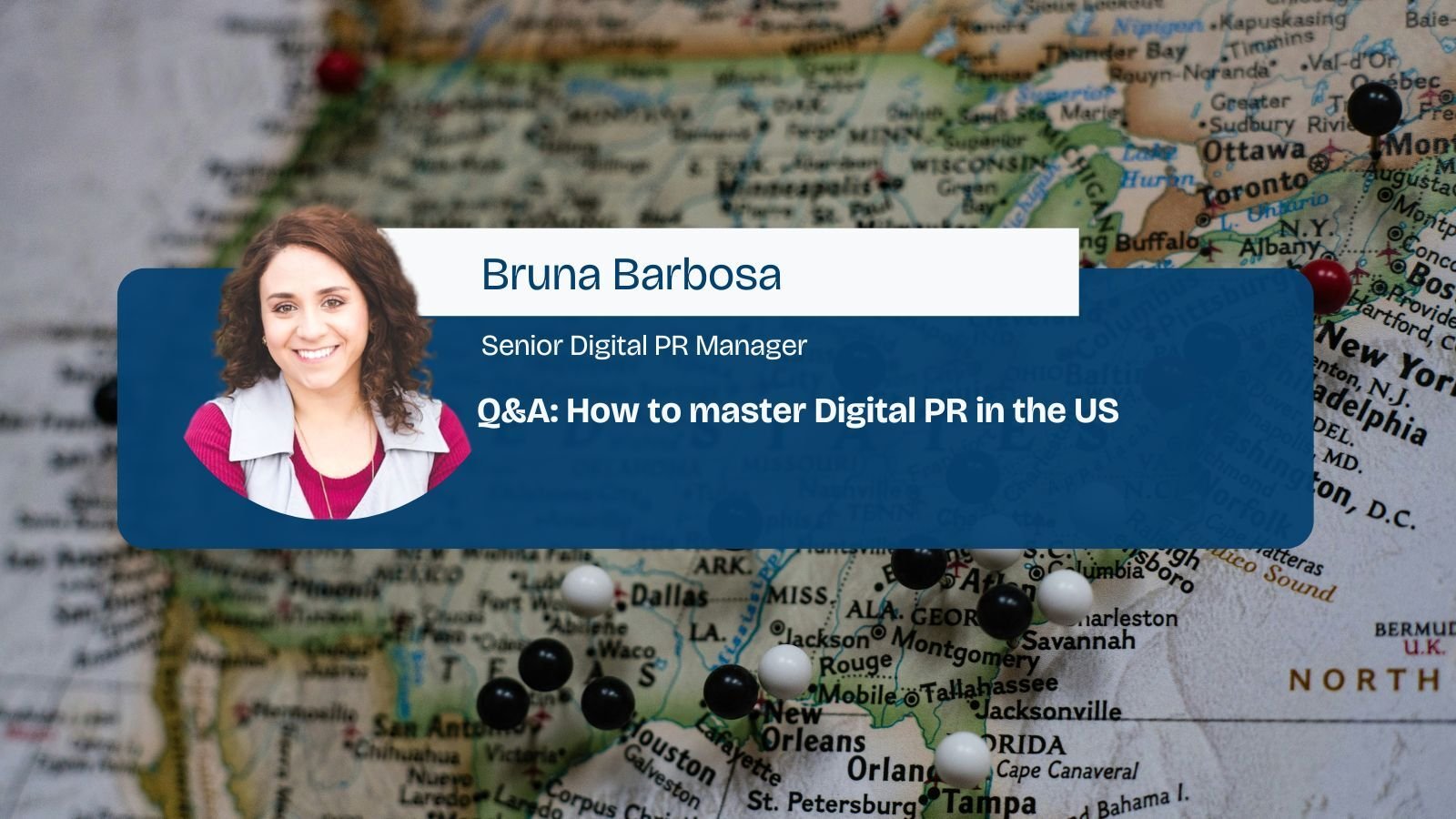 10 min read
How to Master Digital PR in the US
UK Digital PR teams are used to quick results – you send a pitch on a Tuesday, and it can be live on a handful of national, trade or regional sites by Thursday afternoon, depending on the subject. It can be even quicker if it’s in reaction to a trending news topic, such as a heatwave, the Autumn Budget or spider season.
Continue Reading 13 min read
How to pitch a journalist: What an ex-Reach PLC pro really thinks of your pitch
As a Digital PR specialist, getting the unfiltered truth about your work from a seasoned journalist is a rarity. It’s even rarer to have one on your team AND get a chance to interview them.
Continue Reading 19 min read
What is Digital PR? Strategy, Benefits & Launching a Campaign
Traditional PR lives in newspapers, magazines, and TV interviews. The problem? That’s not where audiences are now spending the majority of their time.
Continue Reading 6 min read
10 ways to manage stress and improve your mental health in the PR industry
Burnout in the PR industry is high. PRs often work long hours, manage multiple relationships – including clients with high expectations, and face a lot of rejection and criticism. While poor mental health is not just an issue in PR, there are certain norms specific to the industry which don’t help. Such as the ‘always on’ mentality and the pressure to deliver high quality results and hit key targets.
Continue Reading 7 min read
The must-have tools for any Digital PR pro
Digital PR is tough. Not only are you in competition with every other PR, fighting for the attention of journalists whose time is short and inboxes are full. But you’re also fighting against the broader news cycle. Sometimes there are things going on that you just can’t control. Resulting in your campaign or story getting buried as journalists rush to cover the big event of the day, week or month.
Continue Reading 8 min read
What do Google and AI say when someone searches our name?
What a search for your company name shows is a board-level risk. What to check, why removal rarely works and how positive content pushes negative results down.
Continue Reading