




Digital PR strategy for AI search: getting cited by ChatGPT

Buyers now ask ChatGPT, Perplexity and Google's AI Overviews which supplier to shortlist, and the answer names a handful of brands. Those names come from the sources the assistant reads and cites. If your brand is absent from those sources it is absent from the answer, however well your own site ranks.
That changes what a digital PR strategy is for. Coverage still has to earn links that support rankings, but it now also has to land in the specific publications AI assistants draw on, and it has to say clearly what the brand is.
This article explains how we find those publications, how we earn coverage in them and how we report the result in terms a board will recognise.
Why AI answers are now a PR problem
An AI answer compresses a shortlist into a paragraph. A brand named in it is part of the buying conversation before the buyer visits a single website; a brand left out has to be found some other way, often through paid search.
The evidence that editorial coverage shapes those answers keeps building. Muck Rack's What is AI reading? analysis of more than 25 million links in ChatGPT, Claude and Gemini responses, last updated in May 2026, found earned media accounted for 84% of citations and journalism alone for 27%. An Ahrefs study of 15,000 long-tail prompts found only 12% of URLs cited by AI assistants ranked in Google's top 10 for the same prompt, so ranking well and being cited are not the same thing.
The risk runs both ways. Where coverage of a brand is thin or old, assistants work with whatever they can find, which can mean a competitor's framing of the category or a description of your business that is years out of date. Getting it right means being named, and described accurately, on the questions closest to purchase.
How we build a digital PR strategy for AI citations
Our method connects three things that are usually run separately: the questions buyers ask, the publications assistants cite when answering them, and the coverage we earn. AI citations are the measurable link between them.
- Build the buyer question set. We write the questions a buyer asks at each stage, from understanding the problem to comparing suppliers, in the words they would actually type, and check them with the sales team. Our guide to choosing which prompts to track explains how we decide what makes the list.
- Record which publications each assistant cites. We run every question through ChatGPT search, Perplexity, Google AI Overviews and AI Mode and log each cited URL: Perplexity adds numbered footnotes, and ChatGPT lists its references behind a Sources button. Answers vary between runs, so we repeat each question on several days and count how often a domain appears, not whether it appeared once.
- Group the sources and find the gap. Cited domains are grouped by type (national news, trade press, review and comparison sites, forums) and marked for whether the brand has ever been covered there and which competitors are named. Publications that are cited often, cover your category and have never mentioned you become the target list. We also note the type of page cited, such as a roundup, an explainer or a news report, because it tells us what form the coverage needs to take.
- Match the campaign type to the publication. Trade titles respond to expert commentary and sector data, national titles to data-led stories and reactive comment, and comparison sites to a credible case for inclusion. We never pay for inclusion or send product in exchange for a link, which Google's spam policies class as link spam, and we drop any cited site that openly sells placements.
- Write the one line that describes the brand. Every press release, spokesperson credit and boilerplate carries the same sentence stating what the business is, what it does and who it serves, and the same line appears on the brand's about page and in its Organization structured data, which Google's documentation supports with a description property and sameAs links to profiles elsewhere. Journalists often lift that line as written, so one consistent description repeated across many trusted titles gives an assistant something clear to quote.
- Make sure assistants can reach your own pages. Google says a page only needs to be indexed and eligible to show with a snippet to appear as a supporting link in AI Overviews and AI Mode. OpenAI says sites that opt out of OAI-SearchBot will not be shown in ChatGPT search answers, and Perplexity recommends allowing PerplexityBot, so we check robots.txt and firewall rules before any campaign launches.
- Keep links as the core deliverable. Linked coverage still supports rankings, and Google's AI features draw their supporting links from pages in its index, so links and citations reinforce each other. We count links for what they do for rankings and mentions for what they do for AI answers, and never present one as the other.
- Re-run the question set every month. We repeat the full set, compare mention rate, citation share and the accuracy of the brand description, and move outreach towards the publications gaining weight in answers. The prompt we use to find the sources behind AI answers is free to copy.
How to measure it
We report AI visibility alongside the usual PR measures, because leadership needs to see both. Readings come from the same questions, on the same assistants, on a fixed schedule, because a change in wording or a single day's run can move the numbers more than a month of coverage.
- Mention rate: the share of buyer questions where the brand is named, by assistant.
- Citation share: how often your own pages and your coverage are cited, compared with named competitors.
- Accuracy: whether the description assistants give matches the one line you are putting into every story.
- Coverage in the target publications from step three, with linked and unlinked placements counted separately.
- Organic performance, including clicks from AI Overviews and AI Mode, which Search Console counts in the Performance report under the Web search type.
What to report upwards
Good looks like a rising mention rate on the questions closest to purchase and a brand description in answers that converges on yours. The summary for the board fits in three lines: on the questions buyers ask before they buy, how often are we named, how often are our competitors, and what changed this quarter.
Alongside that, list the target publications won each quarter, so the board can see the activity driving the movement and not only the movement itself.
When it does not fit, and the mistakes we see most
This approach struggles when there is nothing newsworthy to say and no expert to say it, because digital PR cannot manufacture authority. It also disappoints when results are needed within weeks: coverage takes time to earn and assistants take time to reflect it.
It is also the wrong place to start if the brand's own site has problems that stop pages being indexed, or if the business has not agreed how it wants to be described. Fix the site and settle the description first, then earn the coverage.
The mistakes we see most often:
- Treating one screenshot of one answer as evidence.
- Chasing every domain an assistant cites, including sites that sell placements.
- Changing the brand description with every press release.
- Blocking AI search crawlers by accident through a firewall rule or CMS default.
- Counting AI mentions as links in reports, or links as AI visibility.
Questions to ask your team or agency
Whether you run this in-house or with our digital PR and AI search optimisation teams, these questions show whether a strategy is built for AI answers.
- Which questions do our buyers ask AI assistants, and are we named in the answers?
- Which publications do those assistants cite for our category, and when were we last covered in them?
- What single sentence do we want every piece of coverage to use about us?
- Can Googlebot, OAI-SearchBot and PerplexityBot all reach our key pages?
- How are you reporting mentions and links separately?
Frequently asked questions
What is a digital PR strategy?
A digital PR strategy is a plan for earning editorial coverage and links in the publications that matter to a brand's search and AI visibility. It sets which pages need authority, which publications to target, which campaign types to run (data-led, reactive, thought leadership) and how results are measured. Today a good strategy also covers the publications AI assistants cite when answering buyers' questions.
Does digital PR help brands get cited by ChatGPT?
It can. When ChatGPT searches the web it cites sources, and a Muck Rack analysis of more than 25 million AI-cited links found earned media made up 84% of citations. Coverage in publications that assistants already cite for your category gives them a source that names and describes your brand. Results are not guaranteed, so track mention rate across a fixed set of buyer questions.
How do you find out which sources AI assistants cite?
Write the questions your buyers ask, run each one through ChatGPT search, Perplexity and Google's AI Overviews and AI Mode, and log every cited URL. Repeat the runs on several days, because answers vary, then group the cited domains by type and count how often each appears. The domains that recur for your category, and have not covered you, become your outreach targets.
Sources
- What is AI reading? (May 2026), Muck Rack
- Only 12% of AI cited URLs rank in Google's top 10 for the original prompt, Ahrefs (11 August 2025)
- AI features and your website, Google Search Central
- Organization structured data, Google Search Central
- Spam policies for Google web search: link spam, Google Search Central
- Overview of OpenAI crawlers (OAI-SearchBot), OpenAI
- ChatGPT search, OpenAI Help Center
- Perplexity crawlers (PerplexityBot), Perplexity
- How does Perplexity work?, Perplexity Help Center


Let’s create your future growth plan
Get My Growth PlanRelated Playbooks
 No. 01Commerce3,412 words13 min read
A Visibility Playbook for E-commerce
Why above-the-fold organic CTR has collapsed, and how to make PDPs and PLPs work as both conversion assets and AI citations in 2027.
Read More No. 02Commerce3,771 words15 min read
A Visibility Playbook for Fashion Brands
Brand experience meets specification. How fashion brands earn visibility across SEO, GEO and the AI-mediated consideration set.
Read More No. 04B2B3,588 words14 min read
A Visibility Playbook for B2B Lead Generation
Pipeline attribution is broken. The visibility framework that works on a 6–18 month sales cycle in 2027.
Read More
More articles we
think you’ll like
 7 min read
How we build data-led digital PR campaigns that earn coverage
The method behind our data-led digital PR campaigns, from sourcing original data and testing angles to regional cuts and tracking every link back to the page it supports.
Continue Reading 7 min read
Reactive PR in practice: turning breaking news into links
How we run reactive PR day to day, from the morning news scan and the credibility test to one-hour sign-off, and why the first usable expert quote usually wins the coverage.
Continue Reading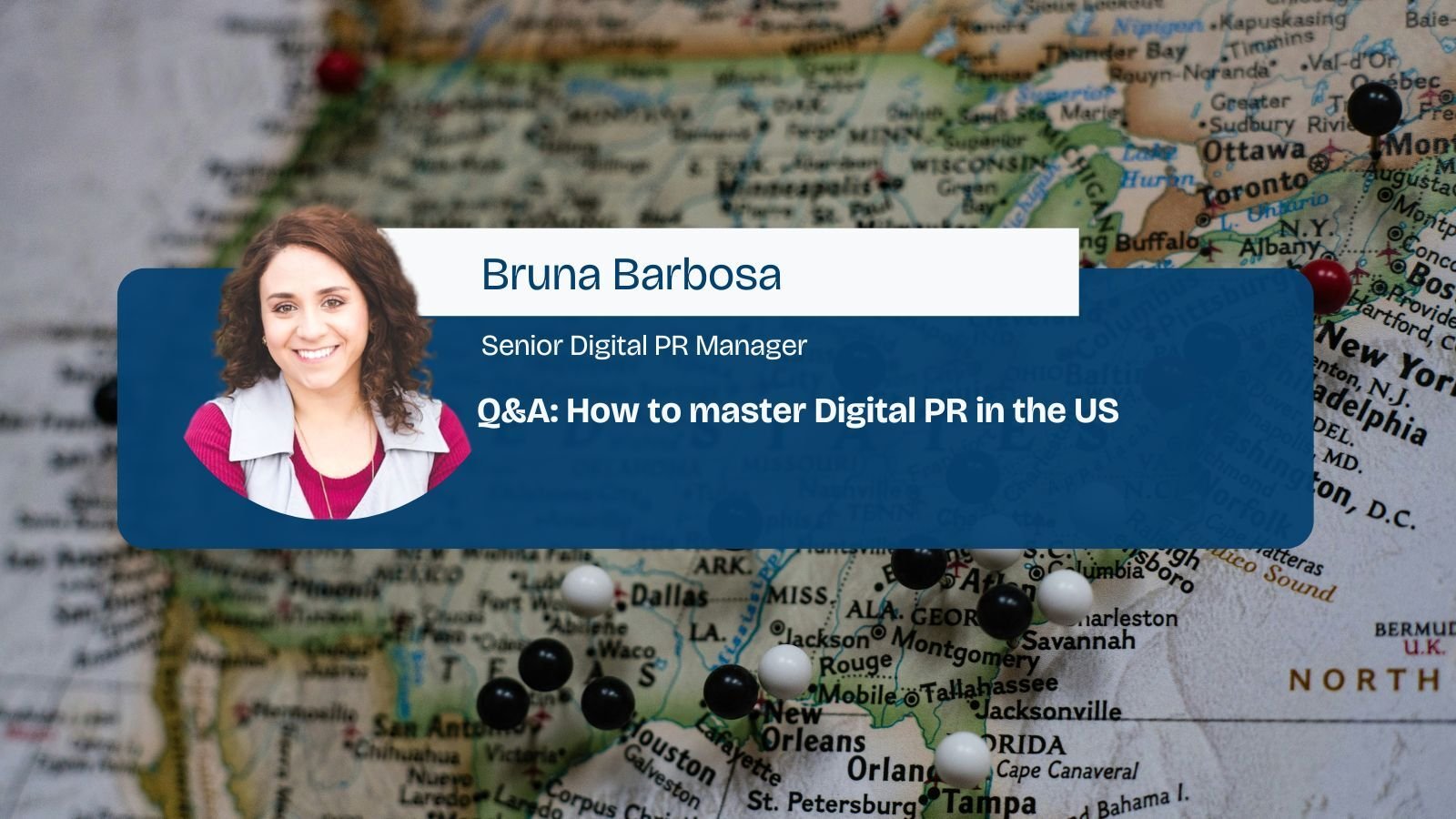 10 min read
How to Master Digital PR in the US
UK Digital PR teams are used to quick results – you send a pitch on a Tuesday, and it can be live on a handful of national, trade or regional sites by Thursday afternoon, depending on the subject. It can be even quicker if it’s in reaction to a trending news topic, such as a heatwave, the Autumn Budget or spider season.
Continue Reading 13 min read
How to pitch a journalist: What an ex-Reach PLC pro really thinks of your pitch
As a Digital PR specialist, getting the unfiltered truth about your work from a seasoned journalist is a rarity. It’s even rarer to have one on your team AND get a chance to interview them.
Continue Reading 19 min read
What is Digital PR? Strategy, Benefits & Launching a Campaign
Traditional PR lives in newspapers, magazines, and TV interviews. The problem? That’s not where audiences are now spending the majority of their time.
Continue Reading 6 min read
10 ways to manage stress and improve your mental health in the PR industry
Burnout in the PR industry is high. PRs often work long hours, manage multiple relationships – including clients with high expectations, and face a lot of rejection and criticism. While poor mental health is not just an issue in PR, there are certain norms specific to the industry which don’t help. Such as the ‘always on’ mentality and the pressure to deliver high quality results and hit key targets.
Continue Reading 7 min read
The must-have tools for any Digital PR pro
Digital PR is tough. Not only are you in competition with every other PR, fighting for the attention of journalists whose time is short and inboxes are full. But you’re also fighting against the broader news cycle. Sometimes there are things going on that you just can’t control. Resulting in your campaign or story getting buried as journalists rush to cover the big event of the day, week or month.
Continue Reading 8 min read
SEO forecasting your finance director will believe
How to build an SEO forecast and business case that survives a finance review: stated assumptions, your own data, three scenarios, payback and tracking against actuals.
Continue Reading 8 min read
SEO reporting for the board: the KPIs a marketing director should own
The SEO KPIs a board needs: non-brand revenue and new customers, share of search, AI visibility, leading indicators with context, and cost and payback on one page.
Continue Reading